Having researched the auto industry for several years culminating with a 170+ page MBA thesis (The Hybrid Phenomenon) that exceed expectations by boiling down 1,000 pages of research into publication (The Futurist) after a three year investment that included visiting a Toyota production line in the USA and talking to end users in Japan...
I have boiled Toyota (including lean) down to a few basic principles:
TOYOTA PRINCIPLE 1
The first is that Toyota is NOT a car company in an industry full of struggling car companies.
Toyoda started out as a loom copmany, so it's DNA started with a very simple high volume low defect rate production system. Manufacturing was simple, few moving parts with empowered machine operator.
The founder's son I believe, started Toyota. He ventured into cars because of his passion. But in Japan, sons almost always obey and respect elders, especially fathers, so the DNA of duplicating simple materials with a low defect rate were transferred to the new subsidiary.
Even Today, almost all of Toyota's car products look similar. For example the shape of the Camry, Corolla and Prius noses share the same lines.
So from the old school Toyoda non-car company DNA, I believe lean was inherited from a simple loom (few moving parts) producing a high volume amount of cloth with almost no defects. A very simple, yet automated process with few moving parts and an operator that stopped the machine anytime a problem arose...
TOYOTA PRINCIPLE 2
After visiting NUMMI for a factory tour, my second principle became crystal clear. Aside from all the details that follow Japan's DNA of kaizen, Toyota's production line had one SIMPLE process that differed from anything in any production line, let alone the world's largest business (auto and realted industries).
ANY employee, team member, manager, temp, etc. had the ability to STOP THE PRODUCTION LINE for ALMOST ANY RELATIVE REASON!!!
When each second could cost the parent company millions of dollars, why would Toyota build in this stop safe into the world's leading production line?
Let's go back to the loom company (Toyoda) that Toyota really is. Think of machines weaving cloth run by one worker each. When a defect or accident occurred, every yard or meter of cloth thereafter would be ruined. In other words Toyoda, decades before Toyota, learned that stopping the production process immediately yielded higher quality in the longer run.
After all, if anything interfered with the production of a material, it was naturally apparent via the human eye. Lean relies on the operators.
I believe that lean is a HUMAN PROCESS OPPOSING the view of much of the literature and comments above that treat lean as a system of machines and processes.
I disagree with the Western's interpretation of
"lean" and "waste" and "continuous improvement"
from my decade long analysis of the auto industry
and years living in and researching Japan on the ground
as well as visiting NUMMI's production line!
SUMMARY
If you want lean, give ANY team member, worker, temp,
employee, partner, supplier, downstream customer, etc.
THE ABILITY TO SHUT DOWN YOUR OPERATIONS
SO THAT YOU LOSE REVENUES IN THE SHORT RUN
in exchange for continous change (literal translation of kaiken)
and an acceptance of mistakes for higher quality in the long run.
ACHESON'S TOYOTA FORMULA
empowering everyones' mistakes
-
rewarding short term revenue loss
+
acceptance of continuous change
(not necessarily improvement)
=
LEAN
defined by John Acheson as
"holistic organizational viability"
that values internal and external members
while empowering inwards and delivering
highest quality utility outwards!!!
by John Acheson, CEO, MBA
Author of the Hybrid Phenomenon
www.johnacheson.blogspot.com
PS Did you know???
The Toyota brand is over 500 different companies including a few that build and sell houses in Japan???
Showing posts with label Toyota. Show all posts
Showing posts with label Toyota. Show all posts
Thursday, January 21, 2010


Monday, May 18, 2009
Driving Digital's New Dawn
The digital development of automaking will see a new dawn tomorrow
driven by new laws that deem dirty to average cars illegal!
"This is the single biggest step the American government has ever taken..."
What's the number one factor and
number one consumer benefit that
is driving digital automaking?
Many studies and most of the research over the past decade
shows that higher gas prices cause digital cars and trucks
to accelerate in sales as buyers seeks higher MPGs.
Starting tomorrow, the USA MPG bar will move significantly
higher than ever before in American history as
California's green digital screams turn into new laws
on capitol hill; the highest MPG state laws are being
studied to establish a new federal wide standard that
will force digital automaking unto all players
that want to continue to enjoy the most important
car and truck markets in the world.
CA and CAFE's millennial son could become the biggest
stick in the history of digital automaking and I'm
going to place my bets by buying Honda Motor Co., Ltd.
common stock traded on the American markets because
this digital automaker has the highest
mileage fleet being bought in the USA.
These companies also hire tens of thousands of American
workers that are working to make cars and trucks cleaner
so that our precious oil used for everything from shipping
everything you buy at every store to your toothpaste tube
to every toy to your entertainment center and computer
can last longer and we don't have to burn up the rest
running errands and waiting at stoplights.
Remember that all digital vehicles have the ability
to stop burning oil at stoplights and stop signs!!!
INVESTMENT ANALYSIS
Based on the assumption that a new race to 42 MPG
for automaker fleetwide average will take off tomorrow
the following analysis is based on Greenopia's MPG ratings
of 42 automakers from Ferrari at 12 MPG to Smart at 36 MPG
allthough the list does not include brands such as Tesla
that earn well over 100 MPG in gallon of gasoline equivalent
which doesn't matter anyway in terms of investment since we
cannot buy public stock in them. Also note that companies like
MINI or Smart are also not available as stand alone investments,
so the trick is to find the automaker that has the best MPG
AND has enough volume on a stock market to enjoy appreciation.
25 MPG BRANDS: there's only six brands
(Smart, Mini, Scion, Honda, Saturn, Toyota)
that get over 25 MPG and of those
only two are automakers (Honda and Toyota)
as Smart is Daimler, Mini is BMW (20.5) and Scion is Toyota.
How many brands at the bottom of the list are in bankruptcy?
Hummer (15.5 MPG), Cadillac (17.6), GMC (17.8), Jeep (19.1), Dodge (19.2)
and interestingly, none of these brands have launched a successful digital.
In summary, I have decided to buy shares of HMC (Honda Motor Co., Ltd.)
at market open price based on anticipation of the new federal digital race
towards 42 MPG and hope that my investment in the 500 companies that Honda
runs continue to provide us with benefits, utility and future value!!!
driven by new laws that deem dirty to average cars illegal!
"This is the single biggest step the American government has ever taken..."
What's the number one factor and
number one consumer benefit that
is driving digital automaking?
Many studies and most of the research over the past decade
shows that higher gas prices cause digital cars and trucks
to accelerate in sales as buyers seeks higher MPGs.
Starting tomorrow, the USA MPG bar will move significantly
higher than ever before in American history as
California's green digital screams turn into new laws
on capitol hill; the highest MPG state laws are being
studied to establish a new federal wide standard that
will force digital automaking unto all players
that want to continue to enjoy the most important
car and truck markets in the world.
CA and CAFE's millennial son could become the biggest
stick in the history of digital automaking and I'm
going to place my bets by buying Honda Motor Co., Ltd.
common stock traded on the American markets because
this digital automaker has the highest
mileage fleet being bought in the USA.
These companies also hire tens of thousands of American
workers that are working to make cars and trucks cleaner
so that our precious oil used for everything from shipping
everything you buy at every store to your toothpaste tube
to every toy to your entertainment center and computer
can last longer and we don't have to burn up the rest
running errands and waiting at stoplights.
Remember that all digital vehicles have the ability
to stop burning oil at stoplights and stop signs!!!
INVESTMENT ANALYSIS
Based on the assumption that a new race to 42 MPG
for automaker fleetwide average will take off tomorrow
the following analysis is based on Greenopia's MPG ratings
of 42 automakers from Ferrari at 12 MPG to Smart at 36 MPG
allthough the list does not include brands such as Tesla
that earn well over 100 MPG in gallon of gasoline equivalent
which doesn't matter anyway in terms of investment since we
cannot buy public stock in them. Also note that companies like
MINI or Smart are also not available as stand alone investments,
so the trick is to find the automaker that has the best MPG
AND has enough volume on a stock market to enjoy appreciation.
25 MPG BRANDS: there's only six brands
(Smart, Mini, Scion, Honda, Saturn, Toyota)
that get over 25 MPG and of those
only two are automakers (Honda and Toyota)
as Smart is Daimler, Mini is BMW (20.5) and Scion is Toyota.
How many brands at the bottom of the list are in bankruptcy?
Hummer (15.5 MPG), Cadillac (17.6), GMC (17.8), Jeep (19.1), Dodge (19.2)
and interestingly, none of these brands have launched a successful digital.
In summary, I have decided to buy shares of HMC (Honda Motor Co., Ltd.)
at market open price based on anticipation of the new federal digital race
towards 42 MPG and hope that my investment in the 500 companies that Honda
runs continue to provide us with benefits, utility and future value!!!
Friday, April 10, 2009
Digital Tires
I went out to the truck the other day, and it looked pretty low on one side...
The front left tire was flat so I changed the tire and checked the odometer...
The Original Equipment (OE) tires were beyond their life at over
70,000 miles which meant that I drove very carefully and
constantly exceeded the EPA MPG rating...
Even though I didn't have the digital version of the vehicle.
In the gasoline Ranger rated at around 20 MPG avg,
I've been able to get 24 MPG around town and up to 38 MPG on the highway
which is almost doubling mileage or 40% OFF your $1,000 to $5,000 gas bill/yr.
For a higher mileage car,
doubling mileage would mean going from 30 to 60 MPG
or 40 to 80 MPG or even 50 to 100 MPG for advanced users.
In my last digital car with the tires pumped up on the highway behind a semi truck
it was easy to get mileage over 100 MPG for a few minutes at a time by lowering
resistance, both air and tire.
So let's take a look at digital tiremaking:
Some studies show tires eating up to 20% of your fuel energy!
One of the most expensive solutions is reported as Michelin's $43,000,000+
investment into the "Energy Saver" series of tire release in Europe
that for some unknown reason is being dumbed down as "Primacy" for the USA.
So here's a list of tires on digital vehicles installed by manufacturers
on to stock digital vehicles that were developed with mileage in mind.
"Bridgestones" - Toyota RAV-4 EV
Bridgestone Potenza - Honda Insight Hybrid USA
Continental ContiTrac EcoPlus - Ford Escape Hybrid USA
Dunlop SP31A - 2010 Honda Insight Revenge
Goodyear FuelMax (an extra mile) - 2011 Chevrolet Volt
Michelin Energy LX4 - 2007 Toyota Highlander Hybrid
Michelin Energy Saver - Toyota Prius EURO
Michelin HXV4 - Toyota Prius USA
Michelin MXV4 (215/60R 16 95H)- Honda FCX
Michelin Pilot HX MXM4 (215/45R17 87V) - 2010 Prius Hybrid USA
Michelin Proxima RR (175/65R14, self-sealing tires, tire pressure warning indicator) - Saturn EV-1
Yokohama ADVAN A10F (160/A/A) - Lexus GS450h
Yokohama ADVAN Neova - 2006 Tesla Roadster
Yokohama AVS E100 Radial (195/80R16 at 44 psi) - 1996 Toyota RAV-4 EV
Yokohama E105 (205/60R15 91H) - 2004-2007 Honda FCX Fuel Cell Vehicle
This list is a work in progress as OEM tire research
is much more difficult than expected.
The front left tire was flat so I changed the tire and checked the odometer...
The Original Equipment (OE) tires were beyond their life at over
70,000 miles which meant that I drove very carefully and
constantly exceeded the EPA MPG rating...
Even though I didn't have the digital version of the vehicle.
In the gasoline Ranger rated at around 20 MPG avg,
I've been able to get 24 MPG around town and up to 38 MPG on the highway
which is almost doubling mileage or 40% OFF your $1,000 to $5,000 gas bill/yr.
For a higher mileage car,
doubling mileage would mean going from 30 to 60 MPG
or 40 to 80 MPG or even 50 to 100 MPG for advanced users.
In my last digital car with the tires pumped up on the highway behind a semi truck
it was easy to get mileage over 100 MPG for a few minutes at a time by lowering
resistance, both air and tire.
So let's take a look at digital tiremaking:
Some studies show tires eating up to 20% of your fuel energy!
One of the most expensive solutions is reported as Michelin's $43,000,000+
investment into the "Energy Saver" series of tire release in Europe
that for some unknown reason is being dumbed down as "Primacy" for the USA.
So here's a list of tires on digital vehicles installed by manufacturers
on to stock digital vehicles that were developed with mileage in mind.
"Bridgestones" - Toyota RAV-4 EV
Bridgestone Potenza - Honda Insight Hybrid USA
Continental ContiTrac EcoPlus - Ford Escape Hybrid USA
Dunlop SP31A - 2010 Honda Insight Revenge
Goodyear FuelMax (an extra mile) - 2011 Chevrolet Volt
Michelin Energy LX4 - 2007 Toyota Highlander Hybrid
Michelin Energy Saver - Toyota Prius EURO
Michelin HXV4 - Toyota Prius USA
Michelin MXV4 (215/60R 16 95H)- Honda FCX
Michelin Pilot HX MXM4 (215/45R17 87V) - 2010 Prius Hybrid USA
Michelin Proxima RR (175/65R14, self-sealing tires, tire pressure warning indicator) - Saturn EV-1
Yokohama ADVAN A10F (160/A/A) - Lexus GS450h
Yokohama ADVAN Neova - 2006 Tesla Roadster
Yokohama AVS E100 Radial (195/80R16 at 44 psi) - 1996 Toyota RAV-4 EV
Yokohama E105 (205/60R15 91H) - 2004-2007 Honda FCX Fuel Cell Vehicle
This list is a work in progress as OEM tire research
is much more difficult than expected.
Sunday, February 24, 2008
All About Electric & Hybrid Cars Nugget
This post is one in a series where I capture
"nuggets" of information from books
that we can also use for our references
or to back up our arguments.
In All About Electric & Hybrid Cars by Robert J. Traister
Copyright 1982 by TAB BOOKS, INC, Blue Ridge Summit, PA
on pages 82-88 discusses controlling the speed of electric motors.
This is a very expensive and important topic
and was actually the bottleneck for Toyota
in developing the 80 G21 designs into the
Hybrid Synergy Drive that came may failures
and years later. The most expensive was the
decision to start a factory to manufacturer
power controllers because they could not source them.
Traister writes from an engineering perspective
and explains how the "gas pedal" works in electrics and hybrids:
PULSING TECHNIQUE
Rather than controlling the amount of air that enters a gasoline engine,
turning off and on the electricity to the motor depending on where the
gas pedal is describes pulsing or controlling the motor so you can drive.
SCR
Traister cites silicon-controlled rectifiers (SCRs) as the best devices
because they are highly efficient (95%). Compare that with burning
gasoline one of every four strokes (25%). Remember that electric
motors and batteries have been described as 90% efficient in my
interview with a Tesla Motors VP.
PROS = Secret Black Box
Although the SCR has no moving parts, it can clearly be wired
or programmed to perform differently. I believe that nearby is
where you will find billions of dollars of R&D monies invested
over the next 100 years of digital car development.
Probably in the system controllers that tell the SCR
WHEN, which way and what to do,
both in terms of hardware and software.
CONS = Cost
In 1982 dollars, Traister quoted SCR choppers for 400 amps
for the do-it-yourself electric or hybrid vehicle builder at
$750 to $3000 each.
Even back in the day, Traister agreeed with my silver bullet R&D hypothesis
of controllers over batteries by closing the chapter with,
"Much research and development is presently underway by various companies in the motor controller field. A listing of some of these manufacturers can be found in the appendices of this book."
The list was long 25 years ago and I've taken the time to list the names of organizations from Traister's 1983 Appendix E here ON CONTROLLERS: Brewer Associates, Cableform, Inc., Curtis Instruments, Dart Controls, Inc., EHB Systems, Inc., Electric Motion Control Corp., Electric Regulator, EVC Inc., Fengler Controls, FMC Corporation, General Electric Company, General Power Corporation, H.B. Electrical Mfg. Co., Inc., Propel Inc., RH Electronics, Robert Borsche Corporation, Ross Engineering Corporation, Sevcon, Siskiyou Energy Systems, Soleq Corporation, Uniparts Inc. and Unitron Corp.
Now that's a much lower profile yet arguably more important
list than what you see today, and Secret Black Boxes are
just as hidden even though the end product has blossomed.
The list has grown much larger into many different lists today
and one of my favorite is the Automotive X Prize Teams.
It's amazing to see so many digital auto entrepreneurs
with so few patents and hard core controller understanding.
If I was getting into the digital auto game, I would make sure
my team knew about every controller patent out there as
well as every competitor using a controller to drive a car,
then only then, could I successfully plot the tactics to win.
WHY?
Because if Toyota has a $1,000,000,000.00+ head start on SCR and controller R&D,
what company in their right mind could ever catch up. It doesn't matter if we're
talking about the next great battery, electric cars, hybrids or digital cars,
if you don't have hundreds of patents in your Secret Black Box,
you had better get a license or buy a company fast!!!
THANK YOU Traister for
spending several pages laying out a basic explanation for
tomorrow's "gas pedal" in a world accelerating the use of electrons.
TAKEAWAY
So the next time you pick a stock or judge an electric car company,
criticize a hybrid or start up your own digital automaker,
take a good hard look under the hood of the Secret Black Box.
HINT
It's the big black or silver looking thing under every hood
in plain sight with special words like Hybrid Synergy Drive
hiding billions of dollars, thousands of paychecks, hundred of patents
and the basics of what will drive the digital automotive revolution for years to come!
"nuggets" of information from books
that we can also use for our references
or to back up our arguments.
In All About Electric & Hybrid Cars by Robert J. Traister
Copyright 1982 by TAB BOOKS, INC, Blue Ridge Summit, PA
on pages 82-88 discusses controlling the speed of electric motors.
This is a very expensive and important topic
and was actually the bottleneck for Toyota
in developing the 80 G21 designs into the
Hybrid Synergy Drive that came may failures
and years later. The most expensive was the
decision to start a factory to manufacturer
power controllers because they could not source them.
Traister writes from an engineering perspective
and explains how the "gas pedal" works in electrics and hybrids:
PULSING TECHNIQUE
Rather than controlling the amount of air that enters a gasoline engine,
turning off and on the electricity to the motor depending on where the
gas pedal is describes pulsing or controlling the motor so you can drive.
SCR
Traister cites silicon-controlled rectifiers (SCRs) as the best devices
because they are highly efficient (95%). Compare that with burning
gasoline one of every four strokes (25%). Remember that electric
motors and batteries have been described as 90% efficient in my
interview with a Tesla Motors VP.
PROS = Secret Black Box
Although the SCR has no moving parts, it can clearly be wired
or programmed to perform differently. I believe that nearby is
where you will find billions of dollars of R&D monies invested
over the next 100 years of digital car development.
Probably in the system controllers that tell the SCR
WHEN, which way and what to do,
both in terms of hardware and software.
CONS = Cost
In 1982 dollars, Traister quoted SCR choppers for 400 amps
for the do-it-yourself electric or hybrid vehicle builder at
$750 to $3000 each.
Even back in the day, Traister agreeed with my silver bullet R&D hypothesis
of controllers over batteries by closing the chapter with,
"Much research and development is presently underway by various companies in the motor controller field. A listing of some of these manufacturers can be found in the appendices of this book."
The list was long 25 years ago and I've taken the time to list the names of organizations from Traister's 1983 Appendix E here ON CONTROLLERS: Brewer Associates, Cableform, Inc., Curtis Instruments, Dart Controls, Inc., EHB Systems, Inc., Electric Motion Control Corp., Electric Regulator, EVC Inc., Fengler Controls, FMC Corporation, General Electric Company, General Power Corporation, H.B. Electrical Mfg. Co., Inc., Propel Inc., RH Electronics, Robert Borsche Corporation, Ross Engineering Corporation, Sevcon, Siskiyou Energy Systems, Soleq Corporation, Uniparts Inc. and Unitron Corp.
Now that's a much lower profile yet arguably more important
list than what you see today, and Secret Black Boxes are
just as hidden even though the end product has blossomed.
The list has grown much larger into many different lists today
and one of my favorite is the Automotive X Prize Teams.
It's amazing to see so many digital auto entrepreneurs
with so few patents and hard core controller understanding.
If I was getting into the digital auto game, I would make sure
my team knew about every controller patent out there as
well as every competitor using a controller to drive a car,
then only then, could I successfully plot the tactics to win.
WHY?
Because if Toyota has a $1,000,000,000.00+ head start on SCR and controller R&D,
what company in their right mind could ever catch up. It doesn't matter if we're
talking about the next great battery, electric cars, hybrids or digital cars,
if you don't have hundreds of patents in your Secret Black Box,
you had better get a license or buy a company fast!!!
THANK YOU Traister for
spending several pages laying out a basic explanation for
tomorrow's "gas pedal" in a world accelerating the use of electrons.
TAKEAWAY
So the next time you pick a stock or judge an electric car company,
criticize a hybrid or start up your own digital automaker,
take a good hard look under the hood of the Secret Black Box.
HINT
It's the big black or silver looking thing under every hood
in plain sight with special words like Hybrid Synergy Drive
hiding billions of dollars, thousands of paychecks, hundred of patents
and the basics of what will drive the digital automotive revolution for years to come!
Friday, February 22, 2008
Which Business Score Counts???
at Martin's Tesla Founders Blog
there is a very lively debate
on how to keep score of a business.
Most of the businesses are automakers
and the products are usually cars.
The majority camp believes that products are what matter
and the minority camp (that myself and Martin subscribe to)
value business systems as more important than business products.
In Built to Last by two Stanford Professors,
the argument is deepened further,
akin to "clock building" vs "time telling."
Clock building is focusing on things in your company's DNA,
like for Toyota, kaizen, or values like frugality that help
employees on business trips order ramen instead of sushi.
Telling time is like making a MP3 player because everyone else is.
The hybrid and electric vehicle is much like the iPod for the world'
largest business and companies are all over the place in searching
for strategies: some are product based and few are systems based.
IF I WAS TO STARTUP AN AUTOMAKER SYSTEM...
I WOULD START WITH ? ENTITIES...
but let's save that for another blog, sorry...
BACK TO TESLA FOUNDERS BLOG AND MY RESPONSE TO A BLOGGER KINDLY ANSWERING MY QUESTIONS ABOUT PATENTS AND MARTIN'S RESPONSE
One of the most lively debates appears under Martin's posts on Kaizen.
In response to my question," How many patents does the Tesla Roadster have compared to the Prius?"
TEG wrote:
"Here are some examples:" and proceeded to list some important details that obviously costs his voluntary time!
FIRST OF ALL TEG, I would really like to say THANK YOU for going out of your way to do some research and answer my question. That is very kind of you!
You have taught some of the value of a blog (as I'm new to this system, although I've been scribbling for decades)...
Back to the question about patents related to the topic of kaizen.
COMPANY OR CAR???
As Martin and I try to hit home over and over, it's about the business system and much less about the product.
Kaizen is simply one example, and it DOES NOT mean that anything Toyota touches is golden. Anyway, that system had roots in Deming's work, who had also worked with Ford. So, yes you need a team AND a system, but I argue, system first, most argue team first...
Martin said:
"A lot of you seem to miss my point. Kaizen applies to the way you run a factory, work with suppliers, negotiate contracts, structure the company, etc. The whole point is to encourage evolution so that your business gets better over time and learns from its mistakes.
I am talking about evolution of business processes."
THIS IS PROFOUND AND PROVED IN BUILT TO LAST!!!
SO IF WE ARE COMPARING companies and technologies under the system approach, how do we keep score???
Traditionally, we measure sales, or consumer acceptance. That to me only measures the products, half the battle. After all, a company is a collection of resources working in a unique system.
What about measuring the system???
PATENT SCOREBOARD
I would argue that the patent trade war is a good place to start.
What is a patent anyway???
Well, is it not the result of several failures???
Trial and error inside of a business system.
If so, than the number of patents is a great metric for evaluating business systems (companies), especially startups that don't have customers yet.
BACK TO TEG's hard work on Tesla vs. Toyota patents. FIRST OF ALL, it's unfair to compare these two business systems, Toyota is a collection of hundreds of businesses and thousands of suppliers and tens of thousands of employees, while Tesla is a startup.
BUT, I was very curious to see if anyone out there knew that the G21 project that failed through 80 car designs to accidentally land on the Prius and filed 650 PATENTS ALONG THE WAY!!!
The bottleneck for the most successful digital automobile every produced was the high voltage controller. Even Silicon Valley knows little (has far fewer patents on than lo voltages) about high voltage.
Toyota plowed $1 billion into a secret factory head up by an engineer that started his career scrubbing catalytic converters 30 years prior, churning through the system of Kaizen, where failure in R&D is acceptable. Up in Northern Nagoya, the guy built the brains that became the Hybrid Snergy Drive. The product WAS NOT the goal, it was a system to run the first Prius because no supplier could come up with enough high quality controllers.
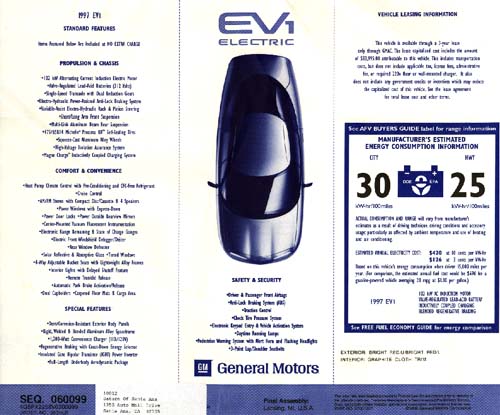
AGAIN THAT WAS A POTENTIAL $1,000,000,000.00 FAILURE (IRONICALLY THE SAME PRICE AS THE EV-1) WITH MANY SMALL FAILURES ALONG THE WAY THAT BECAME PATENTS (IRONICALLY HOW MANY GM EV-1 PATENTS ARE ON THE SCOREBOARD?).
So the reason I keep bringing the Prius into the picture is that VERY FEW people understand how many failures occured and how the Toyota system worked through those with a rush deadline for the Kyoto Protocol. The managers and engineers hated each other on the project.
The other misunderstanding is that people calculate the $1 billion dollar factory into just the Prius and don't realize it's a system that will probably last until Toyota's last day.
SO WHAT IS THE SCORE???
Toyota ($1 billion high voltage controller secret factory and 650 patents that became the Hybrid Synergy Drive)
GM's how many patents on E-Flex
Tesla's how many patents on energy management
Mitsubishi's how many patents on in-wheel electrics
Ford's (300+ related to the Escape hybrid) how many plug-in controller patents
Where we can get a scoreboard of patents on the high voltage race to the digital automobile???
PS I'm not asking for patent search help, as this is not an engineering scoreboard, think ESPN that reports the score on each of the sports systems running. Just the area of patents and number by company.
there is a very lively debate
on how to keep score of a business.
Most of the businesses are automakers
and the products are usually cars.
The majority camp believes that products are what matter
and the minority camp (that myself and Martin subscribe to)
value business systems as more important than business products.
In Built to Last by two Stanford Professors,
the argument is deepened further,
akin to "clock building" vs "time telling."
Clock building is focusing on things in your company's DNA,
like for Toyota, kaizen, or values like frugality that help
employees on business trips order ramen instead of sushi.
Telling time is like making a MP3 player because everyone else is.
The hybrid and electric vehicle is much like the iPod for the world'
largest business and companies are all over the place in searching
for strategies: some are product based and few are systems based.
IF I WAS TO STARTUP AN AUTOMAKER SYSTEM...
I WOULD START WITH ? ENTITIES...
but let's save that for another blog, sorry...
BACK TO TESLA FOUNDERS BLOG AND MY RESPONSE TO A BLOGGER KINDLY ANSWERING MY QUESTIONS ABOUT PATENTS AND MARTIN'S RESPONSE
One of the most lively debates appears under Martin's posts on Kaizen.
In response to my question," How many patents does the Tesla Roadster have compared to the Prius?"
TEG wrote:
"Here are some examples:" and proceeded to list some important details that obviously costs his voluntary time!
FIRST OF ALL TEG, I would really like to say THANK YOU for going out of your way to do some research and answer my question. That is very kind of you!
You have taught some of the value of a blog (as I'm new to this system, although I've been scribbling for decades)...
Back to the question about patents related to the topic of kaizen.
COMPANY OR CAR???
As Martin and I try to hit home over and over, it's about the business system and much less about the product.
Kaizen is simply one example, and it DOES NOT mean that anything Toyota touches is golden. Anyway, that system had roots in Deming's work, who had also worked with Ford. So, yes you need a team AND a system, but I argue, system first, most argue team first...
Martin said:
"A lot of you seem to miss my point. Kaizen applies to the way you run a factory, work with suppliers, negotiate contracts, structure the company, etc. The whole point is to encourage evolution so that your business gets better over time and learns from its mistakes.
I am talking about evolution of business processes."
THIS IS PROFOUND AND PROVED IN BUILT TO LAST!!!
SO IF WE ARE COMPARING companies and technologies under the system approach, how do we keep score???
Traditionally, we measure sales, or consumer acceptance. That to me only measures the products, half the battle. After all, a company is a collection of resources working in a unique system.
What about measuring the system???
PATENT SCOREBOARD
I would argue that the patent trade war is a good place to start.
What is a patent anyway???
Well, is it not the result of several failures???
Trial and error inside of a business system.
If so, than the number of patents is a great metric for evaluating business systems (companies), especially startups that don't have customers yet.
BACK TO TEG's hard work on Tesla vs. Toyota patents. FIRST OF ALL, it's unfair to compare these two business systems, Toyota is a collection of hundreds of businesses and thousands of suppliers and tens of thousands of employees, while Tesla is a startup.
BUT, I was very curious to see if anyone out there knew that the G21 project that failed through 80 car designs to accidentally land on the Prius and filed 650 PATENTS ALONG THE WAY!!!
The bottleneck for the most successful digital automobile every produced was the high voltage controller. Even Silicon Valley knows little (has far fewer patents on than lo voltages) about high voltage.
Toyota plowed $1 billion into a secret factory head up by an engineer that started his career scrubbing catalytic converters 30 years prior, churning through the system of Kaizen, where failure in R&D is acceptable. Up in Northern Nagoya, the guy built the brains that became the Hybrid Snergy Drive. The product WAS NOT the goal, it was a system to run the first Prius because no supplier could come up with enough high quality controllers.
AGAIN THAT WAS A POTENTIAL $1,000,000,000.00 FAILURE (IRONICALLY THE SAME PRICE AS THE EV-1) WITH MANY SMALL FAILURES ALONG THE WAY THAT BECAME PATENTS (IRONICALLY HOW MANY GM EV-1 PATENTS ARE ON THE SCOREBOARD?).
So the reason I keep bringing the Prius into the picture is that VERY FEW people understand how many failures occured and how the Toyota system worked through those with a rush deadline for the Kyoto Protocol. The managers and engineers hated each other on the project.
The other misunderstanding is that people calculate the $1 billion dollar factory into just the Prius and don't realize it's a system that will probably last until Toyota's last day.
SO WHAT IS THE SCORE???
Toyota ($1 billion high voltage controller secret factory and 650 patents that became the Hybrid Synergy Drive)
GM's how many patents on E-Flex
Tesla's how many patents on energy management
Mitsubishi's how many patents on in-wheel electrics
Ford's (300+ related to the Escape hybrid) how many plug-in controller patents
Where we can get a scoreboard of patents on the high voltage race to the digital automobile???
PS I'm not asking for patent search help, as this is not an engineering scoreboard, think ESPN that reports the score on each of the sports systems running. Just the area of patents and number by company.
Tuesday, February 19, 2008
Supply and Demand for Automotive Talent
Here is a quick Literature review for a project I'm working on that will survey the landscape for doctoral students in America studying advanced automotive technologies. This is to test a hypothesis that exacerbated demand by consumer behavior, energy, environment and other macro-forces will NOT be met by the pace of researchers coming out of schools qualified to work on systems engineering to design tomorrow's digital vehicles. Geography will play a major role, including nationalism. In the war between Detroit and imports, Japan is pursuing an in-house strategy while the Big 3 follow an out-sourcing strategy. If the automobile industry moves towards a built to order direct model, such as Dell assembling computers after they are sold, the R&D strategies for the world's largest business may become the most influential key success factors.
Automotive Education at the Doctoral Level
Running Head: DOCTORAL AUTOMOTIVE
A Survey of Automotive Education at the Doctoral Level in American Universities
John E. Acheson
A Survey of Automotive Education at the Doctoral Level in American Universities
Automotive research is the world’s largest Research and Development (R&D) effort. In Natural Capitalism, Hawken and Lovins (1999) emphasized that automotive transportation is the world’s largest industry. In a
It’s the largest manufacturing in
American doctoral students researching automotive technologies are studied in this paper. It is hypothesized that the supply of this primary R&D input, human resources, will be strained in coming decades. As macro-forces including consumer behaviors, governmental policies, energy economics and environmental issues exacerbate demand for automotive R&D, the author investigates if the number of graduates will keep up. The following literature review reveals geography as a key variable in the location, direction and careers of RnD doctoral graduates.
Where does the manpower come from? It’s widely known that college graduates supply the majority of human resources for R&D efforts. According to Landis & Svestka (1983), engineers are an important national resource in which the supply and demand of manpower ensures economic growth: demand is driven by economics, supply is simply linked to an appropriate number of graduates.
In an article that researched American higher education, Folger (1972) studied the relationship between the supply of college graduates and manpower. He concluded that shortages and surpluses occur frequently in
One of the gaps in supply and demand is geography. Cassola (2007) believes that graduates choose to stay in the same states as their schools even though the advanced manufacturing degrees he studied were “hot commodities.”
In the auto industry, national identity appears to be an instrumental R&D variable. The national origin of the R&D armies in the trade war between
Acheson’s (2006) research shows that leading Japanese automakers maintain advanced R&D facilities in their home countries. Unlike American rivals,
The literature review reveals that geography could be one of the most important variables in studying the supply and demand of human resources for the world’s largest R&D effort. These findings suggest that the study could evolve into a model that predicts a gap in the supply of doctoral graduates vs. demand for automotive R&D manpower.
References
Acheson, J. (2006). The Hybrid Phenomenon. Copyrighted masters thesis,
Cassola, J. (2007). More than spinning their wheels. Techniques: Connecting education and careers. 66, 16-18.
Southworth, C. & Stepan-Norris, J. (2003), The geography of class in an industrial American city: Connections between workplace and neighborhood politics. Social Problems, 50, 319-348.
Folger, J.K. (1972). The job market for college graduates. The Journal of Higher Education, 43, 203-222.
Hawken, P. & Lovins A. & Lovins, L.H. (1999), Natural Capitalism (
Hughes, K.H. (2006), Are the wheels coming off the American auto industry? Chronicle of Higher Education. 52.
Landis, F. & Svestka, J.A. (1983). The demand for engineers –- projections through 1987. Management Science Quarterly, 29, 455-464.
M.E. (2007). Parking garage at Clemson’s University’s automotive research center. University Business. 10, 20.
Press, J. (2006). Toyota North American Press Room: Speeches,
Sato, M. (2006). The Honda Myth,
Wednesday, February 13, 2008
Who will win the Lithium race?
Automakers spend more on R&D than any other industry. For example, Toyota spends 10 times more dollars than Apple. Getting to the Prius cost $1 billion and getting to the next digital transportation breakthrough is costing more.
The race to marry Lithium with automobiles is attracting top talent, global money powering new technologies with promising futures.
Just as entrepreneurs and corporate American filled the analogue to digital wake that Napster left in the music industry, venture capitalist and the largest organizations in the world are racing to R&D the iPod for the auto industry.
I wonder who will sell me the automobile that can drive across the digital divide and set the standard to accelerate away from the competition...
Start your Lithium teams and then engines (ranked in random order)!!!
The race to marry Lithium with automobiles is attracting top talent, global money powering new technologies with promising futures.
Just as entrepreneurs and corporate American filled the analogue to digital wake that Napster left in the music industry, venture capitalist and the largest organizations in the world are racing to R&D the iPod for the auto industry.
I wonder who will sell me the automobile that can drive across the digital divide and set the standard to accelerate away from the competition...
Start your Lithium teams and then engines (ranked in random order)!!!
- Team Volt: Sequoia, GM, A123
- Team VW: 360 million euros to develop Li-ion batteries by Bosch, Evonic Degssa, Li-Tec, STEAG Saar Egnergie including 60 million euros from the German govt. (Automotive Engineer, Dec 2007, Vol. 32 Issue 11, p 47)
- Team Nissan: NEC Lamilion Energy, A123, SAP AG
- New Enterprise Associates, BlueRun Ventures, Draper Fisher Jurvetson and DFJ
- Element/$7.5mR1-$15MR2 Deeya Energy
- Team Ford: GE, $30 million R1, $40 million R2 for A123, Sanyo
- Team Phoenix: Al Yousaf, Altair
- Team GM: Cobasts, Johnson
- Vincent Bollore/EDF/$52.8M BatScap/Continental AG/BMW/Pininfarina/BlueCar
- Team Mitsubishi: GS Yuasu, Lithium Energy Japan, MiEV
- Team Tesla: $37M Musk/VantagePoint Venture Partners, Technology Partners, and Draper Fisher Jurvetson/$105M Tesla
- Team Fisker: $10M Kleiner Perkins Caufield & Byers/Quantum
- Team Zenn: Kleiner Perkins Caufield & Byers/EEEstor/$25M Zenn/Lockheed
- Israel Corp., Morgan Stanley, VantagePoint Venture Partners/Renault Nissan/Israel's Ofer Shipping Holdings/$200 million R1 for Project Better Place
Saturday, February 9, 2008
Dear Director of Stanford's Global Climate & Energy Project
 John
John
Acheson, MBA
johnmba@sbcglobal.net | http://johnacheson.blogspot.com/ | http://www.linkedin.com/in/johnmba
Prof. Lynn Orr, Ph.D., Project Director
Global Climate & Energy Project (GCEP)
473 Via Ortega
Dear Dr. Orr:
Thank you for the email announcing your Five-year Anniversary Special Event. Congratulations on such relevant and timely research. I am very interested in attending the event, but have relocated to
I’m writing to thank you for your publically available information, and ask a few questions. At your GCEP website under [Research], I am grateful for the reports “Advanced Transportation” and “Batteries for Electric Vehicles” as well as at the Presentations available at the Advanced Transportation Workshop summary under [Events].
It’s great to see interdisciplinary research bringing together energy and transportation. Are you integrating the ground-breaking research over at Terman? Have you considered Dr. Yi Cui’s recent breakthrough in Lithium? How will the new CarLab’s mission to “radically rethink the automobile” fit into your GCEP vision?
The reason I’m asking these questions, is because I cited your center (see Statement of Purpose) as a research example of the many projects that have taken place between automakers and Stanford over the years.
I have been so impressed with the timely world-class automotive related research at Stanford’s that I recently applied to the Management Science & Engineering’s doctoral program to pursue the dream to continue my Master’s research.
I would like to thank you again for your team’s hard work and inspiration!
Sincerely,
John Acheson
Enclosure Stanford Statement of Purpose
Wednesday, January 30, 2008
Kaizen = Change to Good
The founder of Tesla wrote a piece on his blog at
http://teslafounders.wordpress.com/2008/01/30/kaizan/#comment-1029
that really got my creative juices flowing after playing to my
Japanese and Caucasian heart strings in love the automobile.
Reading Martin's post suddenly made me realize why I respect
Toyota and Ford, although, I've never been excited by actually
driving or using their products. It's because those founders
have actually pioneered processes and not flashy products!!!
Toyota founded, "kaizen" and Ford invented the "assembly line."
Those two management science principles power almost everything
in the digital world and challenge what's left in the industrial
world of industry and business everyday.
Kaizen
First of all, I'll borrow two quotes, "better late than never," and "failure is the opportunity to begin again, more intelligently." This comment is a month too late, I'm sorry for your experience Martin, only time will heal, and as far as Ford, it's not about what kind of product a Ford car or truck is, but about the man that invented the assembly line.
He also failed twice because shareholders wanted an expensive car, he just wanted to race and build another one for the masses. One of his failures became Cadillac, who's focus was the highest profit margins.
Compare that to Toyota's first entry, an ugly underpowered car, that couldn't get on the freeway. Almost identical to the Prius released 50 years later that has gone on to sell one million units at $20,000,000,000 or more along with saving hundreds of thousand of gallons of gasoline.
So if Ford invented the assembly line and Mr. Toyoda studied it, were they engineers or management scientists? Well, one might argue, just as two Stanford professors do in Built to Last, that a company's true value is it's organization, grounded in permanent DNA that never goes away, but any innovative technology that goes through the system can be innovative. Building a clock vs. telling time.
The time is now for building the digital automobile and Toyota started with the Prius foreshadowed by decades of experience in processes grown from looms grounded in Kaizen.
I asked my Japanese wife to simply define this, and she has no automotive or engineering or business background.
She said, "just a moment..." then drew on a scratch piece of paper, some Kanji (Chinese characters imported by a Buddhist monk who achieved enlightenment by walking around Japan's smallest island for months on a trek people still follow today called something like 88 temples) that she thinks reads...
Searching for Kaizen
"aratameru" for the first one and
and she wasn't sure of the reading when standing alone but very clear on the meaning, "yoi."
So what does Kai from China or aratemeru in Japanese really mean? According to a quick internet search, "change, alter, improve, remodel." I would think that change and alter are Eastern and improve and remodel are modern.
Basically, we're talking about change, NOT make better, or run lean... Now take a look at every Toyota or Toyoda product from cars to houses to controllers. The Prius came from 1,000 engineers THROWING out 80 designs to get to 650 patents replaced by the 2nd generation that Hollywood bought to be made obsolete by plug-ins.
I'm not sure about better, but change is 100% correct.
So what about "zen" and not this is not the zen you are thinking about, remember, the Japanese language is the 2nd most difficult language in the world because of three alphabets and multiple meanings. My wife says that in the Kaizen combination, "zen" means yoi.
Well even I know this word. It's good, but it's a very rare way to say good. Normally, one would say, ii. For example, I'm good (full) or good job. Yoi is a different good.
It seems to carry more respect, as if something difficult or important was achieved, almost as if it's more used in the past tense as opposed to have a good day, maybe, "Wow, that was a good effort" no matter what the result was.
There's no question that you made a "yoi" effort at Tesla Martin, and the only constant in the world's biggest business is change.
So putting the two together, I come up with "change good."
NOTICE THAT THIS KAIZEN HAS NOTHING TO DO WITH LEAN or the Western definition, "continuous improvement" which was taught in my MBA coursework.
This has to do with a different perspective. Whereas the East looks at the process, the West looks at the result. Japanese doctor's don't tell patients that they have cancer and focus on the process of what got there and beyond. We want to cut it out, like firing someone who makes a mistake.
But what if mistakes are part of the "kaizen" process, or change to good as opposed to good change. What if Toyota stopped at the 2nd, 5th, 52nd or 79th G21 (Prius) failure?
We might not have a digital benchmark to beat today...
So as you build your next company, I encourage you to focus half of your early efforts on DNA that relates to the process, not the technology. DNA that make an organization, "lean" not matter what kind of transmission or controller goes through the assembly line. And maybe most important, DNA that applauds failure as another chance to start again more good!
http://teslafounders.wordpress.com/2008/01/30/kaizan/#comment-1029
that really got my creative juices flowing after playing to my
Japanese and Caucasian heart strings in love the automobile.
Reading Martin's post suddenly made me realize why I respect
Toyota and Ford, although, I've never been excited by actually
driving or using their products. It's because those founders
have actually pioneered processes and not flashy products!!!
Toyota founded, "kaizen" and Ford invented the "assembly line."
Those two management science principles power almost everything
in the digital world and challenge what's left in the industrial
world of industry and business everyday.
Kaizen
First of all, I'll borrow two quotes, "better late than never," and "failure is the opportunity to begin again, more intelligently." This comment is a month too late, I'm sorry for your experience Martin, only time will heal, and as far as Ford, it's not about what kind of product a Ford car or truck is, but about the man that invented the assembly line.
He also failed twice because shareholders wanted an expensive car, he just wanted to race and build another one for the masses. One of his failures became Cadillac, who's focus was the highest profit margins.
Compare that to Toyota's first entry, an ugly underpowered car, that couldn't get on the freeway. Almost identical to the Prius released 50 years later that has gone on to sell one million units at $20,000,000,000 or more along with saving hundreds of thousand of gallons of gasoline.
So if Ford invented the assembly line and Mr. Toyoda studied it, were they engineers or management scientists? Well, one might argue, just as two Stanford professors do in Built to Last, that a company's true value is it's organization, grounded in permanent DNA that never goes away, but any innovative technology that goes through the system can be innovative. Building a clock vs. telling time.
The time is now for building the digital automobile and Toyota started with the Prius foreshadowed by decades of experience in processes grown from looms grounded in Kaizen.
I asked my Japanese wife to simply define this, and she has no automotive or engineering or business background.
She said, "just a moment..." then drew on a scratch piece of paper, some Kanji (Chinese characters imported by a Buddhist monk who achieved enlightenment by walking around Japan's smallest island for months on a trek people still follow today called something like 88 temples) that she thinks reads...
Searching for Kaizen
"aratameru" for the first one and
and she wasn't sure of the reading when standing alone but very clear on the meaning, "yoi."
So what does Kai from China or aratemeru in Japanese really mean? According to a quick internet search, "change, alter, improve, remodel." I would think that change and alter are Eastern and improve and remodel are modern.
Basically, we're talking about change, NOT make better, or run lean... Now take a look at every Toyota or Toyoda product from cars to houses to controllers. The Prius came from 1,000 engineers THROWING out 80 designs to get to 650 patents replaced by the 2nd generation that Hollywood bought to be made obsolete by plug-ins.
I'm not sure about better, but change is 100% correct.
So what about "zen" and not this is not the zen you are thinking about, remember, the Japanese language is the 2nd most difficult language in the world because of three alphabets and multiple meanings. My wife says that in the Kaizen combination, "zen" means yoi.
Well even I know this word. It's good, but it's a very rare way to say good. Normally, one would say, ii. For example, I'm good (full) or good job. Yoi is a different good.
It seems to carry more respect, as if something difficult or important was achieved, almost as if it's more used in the past tense as opposed to have a good day, maybe, "Wow, that was a good effort" no matter what the result was.
There's no question that you made a "yoi" effort at Tesla Martin, and the only constant in the world's biggest business is change.
So putting the two together, I come up with "change good."
NOTICE THAT THIS KAIZEN HAS NOTHING TO DO WITH LEAN or the Western definition, "continuous improvement" which was taught in my MBA coursework.
This has to do with a different perspective. Whereas the East looks at the process, the West looks at the result. Japanese doctor's don't tell patients that they have cancer and focus on the process of what got there and beyond. We want to cut it out, like firing someone who makes a mistake.
But what if mistakes are part of the "kaizen" process, or change to good as opposed to good change. What if Toyota stopped at the 2nd, 5th, 52nd or 79th G21 (Prius) failure?
We might not have a digital benchmark to beat today...
So as you build your next company, I encourage you to focus half of your early efforts on DNA that relates to the process, not the technology. DNA that make an organization, "lean" not matter what kind of transmission or controller goes through the assembly line. And maybe most important, DNA that applauds failure as another chance to start again more good!
Friday, December 21, 2007
Stanford Statement of Purpose
This statement of purpose headlined an extensive application to
Stanford's Management Science & Engineering doctoral program
that's reported to accept half of all applicants and half of those
are international students.
I come from the lowest socioeconomic quartile and submitted
a 174 page master's thesis, several transcripts including a
3.60 overall MBA GPA as well as long VITA and published
article title The Hybrid Phenomenon!
In my gut, this application ranked in the top half of all
and definitely in the top quartile of American applicants
from the lower socioeconomic quartile that don't have
the resources to buy or attend test prep courses and
materials and have to work part time jobs while earning
GPAs that may appear lower than rival upper class applicants.
This is one of the best pieces I've written in 20 years,
full of passion, research, facts, qualifications and specific
doctoral research interests that fit the MS&E program.
Chicago
Stanford's Management Science & Engineering doctoral program
that's reported to accept half of all applicants and half of those
are international students.
I come from the lowest socioeconomic quartile and submitted
a 174 page master's thesis, several transcripts including a
3.60 overall MBA GPA as well as long VITA and published
article title The Hybrid Phenomenon!
In my gut, this application ranked in the top half of all
and definitely in the top quartile of American applicants
from the lower socioeconomic quartile that don't have
the resources to buy or attend test prep courses and
materials and have to work part time jobs while earning
GPAs that may appear lower than rival upper class applicants.
This is one of the best pieces I've written in 20 years,
full of passion, research, facts, qualifications and specific
doctoral research interests that fit the MS&E program.
Statement of Purpose by John Acheson
After mulling it over, I politely declined due to geography and was about to put the three year doctoral search on the shelf again... But my wife urged, “Your thesis topic is in season right now!” She reminded me that I had gotten published this year and next year would be too late. She was right, and I continued to search for the right program…
There were only a few other labs in the country, mostly around motor city. But
UC Davis pioneered plug-in hybrids but lacked any doctoral offering in management. I had heard about a UCLA professor doing a hybrid engine project, a master’s racing lab in
I had looked at both MS&E and the GSB a few years ago. But coming from the lowest socioeconomic quartile, I’ve always assumed Stanford was out of reach. When Stanford announced plans to build a “state-of-the-art facility for vehicle research on campus,” [[2]] I couldn’t believe it! I took another look, visited the campus again, and realized that the future was happening right now in the Bay Area. With CleanTech booming in the valley, it dawned on me that Stanford could help jump start the next-generation automobile. So I started digging and was pleasantly surprised to find several automotive and related research projects (see Why Stanford?). Wow! Here was a place for my master’s research and MS&E fit my MBA major and specialty.
That’s when the news about Terman announcing CarLab hit me! Like an epiphany, I felt like a first-time home buyer that walks into that perfect house: the one you dream about for years. For me, it was the address “Quonset Hut.” [[3]] Suddenly, it seemed like I had found a place. CarLab’s research mission tapped into my passion and changed my thoughts of Stanford from an ivory tower to friendly lab. SOE now felt like a dream home: world-class multidisciplinary research, perfect geography and a family home.
I’m writing this statement to apply to the doctoral program in Management Science and Engineering at Stanford’s
Why Stanford?
Joining the Stanford automotive network and CleanTech community are the most important purposes. Terman brings together vibrant innovative research that studies the future. Collaboration with Volkswagen to form CarLab is a perfect example.
Stanford’s CarLab will be the only automotive research lab in an American university poised to lead the digital future of the automobile. There’s no competition. I’ve contacted research faculty at Clemson and several schools in
CarLab is both. Professor Chris Gerdes explains "The mission of CarLab is to radically rethink the automobile.” CarLab “will engage the Stanford community and generate research and teaching opportunities.”[[5]]
Dean Jim Plummer is looking “forward to the state-of-the-art facility for vehicle research, where students can help develop the next several generations of automotive transportation” with an “initial focus on vehicle safety and environmental performance.”[[6]]
Stanford’s long history of auto industry research backs up the CarLab mission:
· Volkswagen and CarLab are creating a $5.75 automotive research and teaching program[[7]]
· General Motors (GM) R&D established a major Collaborative Research Lab in Work Systems with
· GM, Honda R&D, Nissan and
· BMW, Daimler, Ford, GM, Honda, Nissan, Volkswagen, Volvo have all been design affiliates and members of the ME Design Industrial Affiliates Teaching Program[[13]]
· Over 25 years ago,
I would like to join Stanford, Terman and MS&E to “radically rethink the automobile.” The desire to study how the auto industry and its global users can overcome a climate, economic and energy crisis defines my purpose.
Dissertation Interests
Conducting research at Stanford’s world-class auto network is an opportunity to study big interdisciplinary problems. As the impact of transportation challenges mankind on a global level across our largest systems, digital is the common theme. Stanford’s position in software and innovation makes Terman researchers poised to lead a potential CleanTech automotive revolution. I want to help model this scenario.
The auto industry is
But the impact of the fleet is massive. Millions are injured or die each year from accidents and smog related deaths alone. Running the fleet consumes more than half of the world’s oil and produces over 50% of the emissions in many large cities. Alternative fuels are exacerbating the demand for feed stocks. With billions of first time buyers coming online in the next decades, the fleet is projected to grow two or three times: straining economics, energy, health, infrastructure and the environment.[[17]]
Our global fleet (all the world’s cars & trucks) is accelerating towards the end of our non-renewable resources while increasing societal costs and global emissions.
I would like to learn how to model the fleet and some of its systems, to measure costs and impact, while studying the digitization of the automobile as the leading answer to this global challenge. I applaud CarLab’s mission to “radically rethink the automobile” and would immediately take this challenge to heart!
Research and Passion
My master’s culminating experience best summarizes my academic excellence and teaching potential (see CV), research potential (see thesis), intellectual independence and vitality (see thesis Preface), ability to communicate research (see The Hybrid Phenomenon article) and passion for automotive technology:
During a three year period that included moving four times, a 700 mile commute, a graduate assistantship, volunteering and more, my research abilities blossomed. I…
· drove, rode, attended, talked, watched, listened and participated
· analyzed, interviewed, read, researched, wrote and edited 1,000+ pages
· distilled a 174 page MBA research project that included 186 footnotes, 24 references, seven tables, 24 figures and four appendices that summarized events, captured ten primary interviews and listed hundreds of hybrids
· earned an A+ and co-published a derivative article after graduation
I also worked part-time, ran businesses, joined academic honor societies and gave back to my alma mater’s community. Driven by curiosity and passion, three years of multiple drafts changed me from grad student to researcher to writer.
My passion for mobility started on a Big Wheel; I’ve been interested in transportation technology every since. From trikes to bikes to go-karts to mini-bikes to motorcycles to automobiles to hybrids including life without a car, I’ve gone from driver to owner to thinker to researcher to concerned citizen about the impact of mobility on mankind.
Accepting my application to the doctoral program in Management Science and Engineering can let my master’s research bloom as Stanford’s CarLab takes root. There has never been a better time and place to learn the multidisciplinary research skills and technical knowledge required to study a “brighter future”[[18]] for the automobile at MS&E’s “interface of engineering, business and public policy.”[[19]]
[[1]] Stanford Report, “Stanford’s nanowire battery holds ten times the charge of existing ones,” Stanford News Service,
[[2]] S. Keyes, “Volkswagen to Contribute $5.75 million to
[[3]] Stanford Report, “Stanford, Volkswagen team up to create automotive research lab,” Stanford News Service,
[[8]]
[[9]] E. Pate-Cornell and Y. Ye, “MS&E | corporate: Industry Affiliates Program - PPT presentation,” Department of Management Science & Engineering. Available: http://www.stanford.edu/dept/MSandE/affiliates/index.html.
[[10]]
[[11]]
[[12]]
[[13]] K. Burns, “Design Industrial Affiliates Teaching Program - A Sampling of Design Affiliates, Past and Present,” Stanford University Department of Mechanical Engineering. Available: http://design.stanford.edu/industrial.html.
[[15]]
[[18]]
[[19]]
Subscribe to:
Posts (Atom)
About Me

- John Acheson
- Portland, OR, United States
- LinkedIn Profile http://www.linkedin.com/in/johnmba Yahoo Answers Profile http://answers.yahoo.com/my/profile;_ylt=AqUFgloHkgwIawoJS0O77lDsy6IX;_ylv=3?show=98f170ed6dadf6edd5fc239fce211dfcaa&preview=true