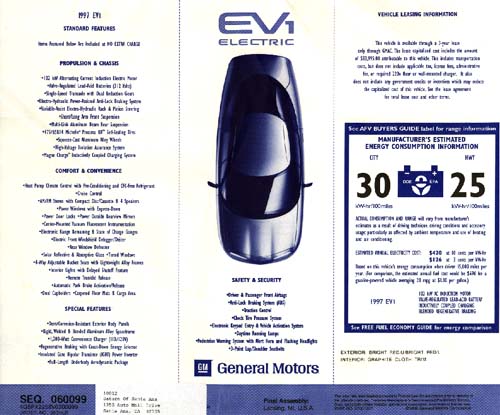
It's good to see the masses finally keying in on the fact that automaking's destiny is digital. Software is a foreign language written in digital known as 1s and 0s to a computer's Central Processing Unit (CPU or engine) which can't really understand anything other than a digital stream of code more commonly known as software.
Did you know that some modern cars have almost 100 small analogue to digital processing units or mini computers already in them???
Why not go electric and eliminate many of those redundant systems and software to save money, create more jobs to help society on a larger scale???
Showing posts with label Ford. Show all posts
Showing posts with label Ford. Show all posts
Wednesday, September 16, 2009


Friday, April 10, 2009
Digital Tires
I went out to the truck the other day, and it looked pretty low on one side...
The front left tire was flat so I changed the tire and checked the odometer...
The Original Equipment (OE) tires were beyond their life at over
70,000 miles which meant that I drove very carefully and
constantly exceeded the EPA MPG rating...
Even though I didn't have the digital version of the vehicle.
In the gasoline Ranger rated at around 20 MPG avg,
I've been able to get 24 MPG around town and up to 38 MPG on the highway
which is almost doubling mileage or 40% OFF your $1,000 to $5,000 gas bill/yr.
For a higher mileage car,
doubling mileage would mean going from 30 to 60 MPG
or 40 to 80 MPG or even 50 to 100 MPG for advanced users.
In my last digital car with the tires pumped up on the highway behind a semi truck
it was easy to get mileage over 100 MPG for a few minutes at a time by lowering
resistance, both air and tire.
So let's take a look at digital tiremaking:
Some studies show tires eating up to 20% of your fuel energy!
One of the most expensive solutions is reported as Michelin's $43,000,000+
investment into the "Energy Saver" series of tire release in Europe
that for some unknown reason is being dumbed down as "Primacy" for the USA.
So here's a list of tires on digital vehicles installed by manufacturers
on to stock digital vehicles that were developed with mileage in mind.
"Bridgestones" - Toyota RAV-4 EV
Bridgestone Potenza - Honda Insight Hybrid USA
Continental ContiTrac EcoPlus - Ford Escape Hybrid USA
Dunlop SP31A - 2010 Honda Insight Revenge
Goodyear FuelMax (an extra mile) - 2011 Chevrolet Volt
Michelin Energy LX4 - 2007 Toyota Highlander Hybrid
Michelin Energy Saver - Toyota Prius EURO
Michelin HXV4 - Toyota Prius USA
Michelin MXV4 (215/60R 16 95H)- Honda FCX
Michelin Pilot HX MXM4 (215/45R17 87V) - 2010 Prius Hybrid USA
Michelin Proxima RR (175/65R14, self-sealing tires, tire pressure warning indicator) - Saturn EV-1
Yokohama ADVAN A10F (160/A/A) - Lexus GS450h
Yokohama ADVAN Neova - 2006 Tesla Roadster
Yokohama AVS E100 Radial (195/80R16 at 44 psi) - 1996 Toyota RAV-4 EV
Yokohama E105 (205/60R15 91H) - 2004-2007 Honda FCX Fuel Cell Vehicle
This list is a work in progress as OEM tire research
is much more difficult than expected.
The front left tire was flat so I changed the tire and checked the odometer...
The Original Equipment (OE) tires were beyond their life at over
70,000 miles which meant that I drove very carefully and
constantly exceeded the EPA MPG rating...
Even though I didn't have the digital version of the vehicle.
In the gasoline Ranger rated at around 20 MPG avg,
I've been able to get 24 MPG around town and up to 38 MPG on the highway
which is almost doubling mileage or 40% OFF your $1,000 to $5,000 gas bill/yr.
For a higher mileage car,
doubling mileage would mean going from 30 to 60 MPG
or 40 to 80 MPG or even 50 to 100 MPG for advanced users.
In my last digital car with the tires pumped up on the highway behind a semi truck
it was easy to get mileage over 100 MPG for a few minutes at a time by lowering
resistance, both air and tire.
So let's take a look at digital tiremaking:
Some studies show tires eating up to 20% of your fuel energy!
One of the most expensive solutions is reported as Michelin's $43,000,000+
investment into the "Energy Saver" series of tire release in Europe
that for some unknown reason is being dumbed down as "Primacy" for the USA.
So here's a list of tires on digital vehicles installed by manufacturers
on to stock digital vehicles that were developed with mileage in mind.
"Bridgestones" - Toyota RAV-4 EV
Bridgestone Potenza - Honda Insight Hybrid USA
Continental ContiTrac EcoPlus - Ford Escape Hybrid USA
Dunlop SP31A - 2010 Honda Insight Revenge
Goodyear FuelMax (an extra mile) - 2011 Chevrolet Volt
Michelin Energy LX4 - 2007 Toyota Highlander Hybrid
Michelin Energy Saver - Toyota Prius EURO
Michelin HXV4 - Toyota Prius USA
Michelin MXV4 (215/60R 16 95H)- Honda FCX
Michelin Pilot HX MXM4 (215/45R17 87V) - 2010 Prius Hybrid USA
Michelin Proxima RR (175/65R14, self-sealing tires, tire pressure warning indicator) - Saturn EV-1
Yokohama ADVAN A10F (160/A/A) - Lexus GS450h
Yokohama ADVAN Neova - 2006 Tesla Roadster
Yokohama AVS E100 Radial (195/80R16 at 44 psi) - 1996 Toyota RAV-4 EV
Yokohama E105 (205/60R15 91H) - 2004-2007 Honda FCX Fuel Cell Vehicle
This list is a work in progress as OEM tire research
is much more difficult than expected.
Sunday, April 5, 2009
Ford's Digital Double Down
Following Honda's Insight Digital Revenge and Prius Fighter,
Ford has announced some big digital numbers to look forward to:
170MPG!!!
Did you know that the Digital Insight and Prius
were rated in Japan at about 94MPG over 10 years ago???
So why are we driving cars and trucks in the 20MPG range???
Do you remember your first computer???
How much did it cost and how fast was the engine???
My first laptop cost over $3K with a Pentium 2 only 10 years ago
and today you can buy a faster better and bigger laptop for 1/5 the price.
So every few years we should expect either
1) twice as much mileage
or
2) half the price
So why have cars been going the wrong way???
Ford's Model T on a good day got over 30MPG,
what do you get today in your analogue car???
I'm guessing you paid 5 times Ford's game changer
AND you get LESS mileage...
Ford's Digital Double Down may finally change the
analogue game to digital because once we take
100MPG for granted we can start talking about
making oil last 200 years or more instead of
the century that is currently projected.
Unless we start taking numbers like Ford's 170MPG
we will burn up the rest of our oil in a short century.
Do you want to leave any oil for your great grand children???
Oil to make jet fuel and diesel
that delivers everything
you use and consume
from food to household items to clothes
to almost anything in every store...
Or should we burn it all up running errands and waiting at stoplights???
Even 170MPG won't leave enough for 7 generations
so write a letter and encourage digital automaking innovation
like Ford's bold step to leap frog the inevitable 100MPG goal line :)
Ford has announced some big digital numbers to look forward to:
170MPG!!!
Did you know that the Digital Insight and Prius
were rated in Japan at about 94MPG over 10 years ago???
So why are we driving cars and trucks in the 20MPG range???
Do you remember your first computer???
How much did it cost and how fast was the engine???
My first laptop cost over $3K with a Pentium 2 only 10 years ago
and today you can buy a faster better and bigger laptop for 1/5 the price.
So every few years we should expect either
1) twice as much mileage
or
2) half the price
So why have cars been going the wrong way???
Ford's Model T on a good day got over 30MPG,
what do you get today in your analogue car???
I'm guessing you paid 5 times Ford's game changer
AND you get LESS mileage...
Ford's Digital Double Down may finally change the
analogue game to digital because once we take
100MPG for granted we can start talking about
making oil last 200 years or more instead of
the century that is currently projected.
Unless we start taking numbers like Ford's 170MPG
we will burn up the rest of our oil in a short century.
Do you want to leave any oil for your great grand children???
Oil to make jet fuel and diesel
that delivers everything
you use and consume
from food to household items to clothes
to almost anything in every store...
Or should we burn it all up running errands and waiting at stoplights???
Even 170MPG won't leave enough for 7 generations
so write a letter and encourage digital automaking innovation
like Ford's bold step to leap frog the inevitable 100MPG goal line :)
Sunday, February 1, 2009
How fast would Edison think?
 Before integrated circuits (ICs) and computer processing units (CPUs)...
computers filled buildings with glass tubes to punch holes in dead trees!
The era of analogue supercomputers also spawned the greatest American genre of automaking: "musclecars!"
Right before Silicon Valley delivered the first personal computer born in a wooden box to two hippies in the 60s (Steve Jobs and Steve Wozniak genius billionaires) Detroit's motor city was pumping out masterpiece after masterpiece: from the 1st through 3rd gen Camaros, Corvettes, Mustangs, Firebirds, Trans Ams, Barracudas, Challengers, Chargers
to those famous components like "six-pack" "double-barrel" "4 on the floor"
the 60s and 70s were arguable the pinnacle of
American Automaking genius!!!
Then came the the Oil Embargo (1973) followed by Jobs and Woz rocking our world with the Personal Computer (PC) on April Fools, 1976!
Analogue American Automaking had a stroke as the stork delivered Digital Computers changing life on Earth forever.
Since the mid-70s American Automaking has been falling and Digital Computermaking has skyrocketed into every industry including automaking which buys 10 times more
computers than Silicon Valley type companies and develops many more digital patents than computer geeks themselves.
CAN THE HORSEPOWER BUSINESS MODEL SURVIVE???
The obvious answer is "horsepower" or "horses" which has been the basic business model ever
since Edison pounded his fist on the desk of his electric company encouraging Ford to
develop his stinky loud 4 wheel bike because it could travel beyond the electric grid.
Yes, the world's most famous electrician was the root
responsible party for 100 years of internal combustion engine
development driven by the quest for more horsepower...
Well, looking back to those beautiful 60s and 70s American Masterpieces of analogue automaking
one couldn't blame them for demanding more and more oil to feed the horsepower business model.
Unfortunately, the model broke first in the 70s killing every world class American design
except maybe the Corvette and Mustang and the engine blew in the 2000s requiring
funny money intravenous injections!!!
Shelby Hitches Electric Horsepower to World's Fastest Coach!!!
 Jerod Shelby (not Carol Shelby associated with Mustangs)
has brought the "horsepower" business model back from
the dead by attaching a major Defibrillator to
the "musclecars!"
taking the cake over yesterday's kids
and even the automaking veteran Fisker.
NOT ONLY could Jerod's Digital Masterpiece
be "World's Fastest Digital Automobile"
thanks to Jobs and Wozniak and not Edison
blowing by Tesla challenging the old adage
of "first mover" with "faster mover"
enforcing that MADE IN USA DIGITAL AUTOMAKING
is accelerating world-class status leading the global mobility revolution!!!
 Congratulations Jerod AeroEVMedia@sscautos.com
enjoy this moment in the quest to become one of the
few automakers who survives the analogue to digital energy shakeout...
Wednesday, February 27, 2008
What is Detroit's Strategy?
One of the world's leading automotive journalists just wrote a piece titled,
"Shooting For Last Place" at Forbes http://www.forbes.com/2008/02/25/detroit-autos-carmakers-oped-cz_jf_0226flint.html
that talks about strategy.
It's an excellent discussion of the tactics pursued by the Bid 3 in early 2008, but I argue below that "tactics" are not "strategy."
Jerry, very courageous in tackling one of the most important yet misunderstood business concepts that plagues the auto industry today: strategy.
In simple terms, the strategic problem is how to get from analogue to digital.
DIGITAL DILEMMAS
Kodak struggled with this from film to digital cameras. Hollywood and New York struggled with this from Napster to iTunes while Apple became one of the most powerful in the world. All the computer manufacturers struggled with this from IBM all the way to Dell. Even your industry Jerry, media, has struggled with the print news to YouTube's dominance. What's the common theme???
Cost cutting tactics such as laying off the most expense part of running a business or lowering the cost of sales channels like Dell did with the highly doubted www.dell.com in the computer maker shakeout are simply tactics.
Strategy is almost always confused with tactics. Detroit is focused on tactics while strategies ebb in and out with various technologies, such as hydrogen hype, hybrid phenomenon to plug-in doubts. Employees and technology comes and goes, strategy is like a ship's keel.
The bottom line is that tactics are worthless without a solid strategy.
Did Dell pursue laying off or cost cutting as a strategy? No, Dell pursued the toughest strategy, a combination of two of Porter's generics: 1) cost leadership (the ONE automaker that can make cars cheapest not cheaper) 2) differentiation (something special customers pay more for) to sell directly to the customer and 3) focus or niche (dominating a small piece of the market).
Dell's goal from Michael's (from dorm room to #9 richest American in 2007) autobiography, was to lower customer costs and increase service. This is sometimes referred to as, "best cost," and often misunderstood. Toyota just about has it, but any loss of service of cost of building any car will hurt. Dell succeeded even though the service subsided over the years.
COST LEADERSHIP
The key is that you've got to build cars as cheap or cheaper than anyone else. Dell was able to get days inventory down from weeks to eight days in his book, and it's probably lower today. This is often misunderstood as the lowest prices. An example would be Wal-Mart vs. K-Mart. Wal-Mart can move and track a pallet of anything cheaper and BETTER than any other supply chain in the world! That's cost leadership, just like Toyota executives that eat ramen instead of sushi on international business trips!
What are average days inventory for the auto industry?
Most businessmen know that a day's inventory can
translate into millions of dollars of cost savings.
Compared to Dell at 8 days, I've heard 20 to 40 is good
and during the rise of the Prius, it went negative as people
placed orders, just like shopping at www.dell.com and waited
for their hybrids to be delivered to the local dealership.
DIFFERENTIATION FOCUS NICHE
The lock is that your quality is also above industry standards because you are delivering 2) and/or 3). For Dell, that was not only the products, but the 24/7 real-time advantage of www.dell.com linked to a supply chain that ran just in time and cost accounting that only purchased things when they were already sold. In short, "build to order" or "direct."
Could you imagine if an automaker pursued the impossible "best cost" strategy with the goal of lowering the cost for the customer while delivering the BEST quality and service.
The Big 3 did this once. After Ford invented the assembly line just as Dell invented direct, Ford held costs down to help the masses open up American roads. The goal was social change and not just hiring more people or creating more dealerships. Those were tactics behind the philosophy distilled into a very clear strategy: "best cost."
Jerry, you are absolutely right in that any automaker "caught in the middle" of strategies is doomed for last place. Porter confirms this happening in industry after industry shakeout. Especially when technology matures and a new curve comes along. Firing people or closing dealership WILL NOT get an automaker to a strategy.
Stuck in the middle strategy is pursuing tactics with no strategy. For example, thinking you can be the ONLY automaker with the LOWEST (NOT LOWER OR LOW) costs and NOT LOWEST PRICES!!! Word of advice to Detroit, forget about COST LEADERSHIP and 1), leave that up to Toyota, India, China, Korea, etc.
DETROIT'S OPTIONS
What about strategy 2) and 3). This is a different story! We know that American quality is higher than expected; this is a business ace! You can build a strategy around "something special" such as high quality large trucks, BUT EVERYTHING has to be special, not just the truck. The employees need to feel special, the factory has to ooze special, the suppliers top of the heap, and in the end the price, yes it's high, but customers are happy with special products backed by special service. So the dealership in this case, would only service trucks, and do it better than Toyota, Nissan and anyone else.
What about 3) focus or niche. Porsche is a good example of differentiation strategy, very clear culture, goal and DNA, and guess what, tactics like human resources and dealerships becomes a no-brainer tactic. Small market, proud world-class employees and R&D, high prices, and lots and lots of profits. Enough to try and buy out the 5th largest company in the biggest business in the world. This would be like Tesla buying Chrysler and not the other way around. How can this be??? A clear strategy setup by Porsche decades ago.
DETROIT'S TACTICS
1) chopping heads
This tactic only supports low costs if you can replace those heads with people that can build cars cheaper than ANY OTHER automaker in the world. Otherwise, the new employees better know how to make something special or have specialized knowledge of a market niche, let's say electric vehicles.
2) closing dealerships
This tactic only supports low costs ONLY if you can run dealerships CHEAPER THAN EVERY OTHER AUTOMAKER. As far as differentiation, maybe if you're the first to be able to develop the direct model for cars, but are customers ready? Toyota did sell half a million Prius without a test drive sight unseen... How about niche? Closing dealerships MIGHT WORK if they are consolidated and moved into specialized markets. For example, shut 80% of the dealerships leaving only those in electric vehicle markets open to become the industry's top service provider for maintenance and repair of ALL electric vehicles from Golf Carts to Teslas to Volts.
FINISH LINE
When Detroit finally gives up its quest for revenues and is forced to focus on profits, there is only ONE WAY TO SURVIVE = A VERY CLEAR AND SIMPLE STRATEGY that everyone from the line worker to the greeter at the dealership can understand and take to heart everyday!
Making cars cheaper than everyone else, making special cars and making cars for a specific market are the only generic strategies available according to Porter. Only the brave can dream of mixing these into best costs and those stuck in the middle will die in the digitization of the world's largest business!
"Shooting For Last Place" at Forbes http://www.forbes.com/2008/02/25/detroit-autos-carmakers-oped-cz_jf_0226flint.html
that talks about strategy.
It's an excellent discussion of the tactics pursued by the Bid 3 in early 2008, but I argue below that "tactics" are not "strategy."
Jerry, very courageous in tackling one of the most important yet misunderstood business concepts that plagues the auto industry today: strategy.
In simple terms, the strategic problem is how to get from analogue to digital.
DIGITAL DILEMMAS
Kodak struggled with this from film to digital cameras. Hollywood and New York struggled with this from Napster to iTunes while Apple became one of the most powerful in the world. All the computer manufacturers struggled with this from IBM all the way to Dell. Even your industry Jerry, media, has struggled with the print news to YouTube's dominance. What's the common theme???
Cost cutting tactics such as laying off the most expense part of running a business or lowering the cost of sales channels like Dell did with the highly doubted www.dell.com in the computer maker shakeout are simply tactics.
Strategy is almost always confused with tactics. Detroit is focused on tactics while strategies ebb in and out with various technologies, such as hydrogen hype, hybrid phenomenon to plug-in doubts. Employees and technology comes and goes, strategy is like a ship's keel.
The bottom line is that tactics are worthless without a solid strategy.
Did Dell pursue laying off or cost cutting as a strategy? No, Dell pursued the toughest strategy, a combination of two of Porter's generics: 1) cost leadership (the ONE automaker that can make cars cheapest not cheaper) 2) differentiation (something special customers pay more for) to sell directly to the customer and 3) focus or niche (dominating a small piece of the market).
Dell's goal from Michael's (from dorm room to #9 richest American in 2007) autobiography, was to lower customer costs and increase service. This is sometimes referred to as, "best cost," and often misunderstood. Toyota just about has it, but any loss of service of cost of building any car will hurt. Dell succeeded even though the service subsided over the years.
COST LEADERSHIP
The key is that you've got to build cars as cheap or cheaper than anyone else. Dell was able to get days inventory down from weeks to eight days in his book, and it's probably lower today. This is often misunderstood as the lowest prices. An example would be Wal-Mart vs. K-Mart. Wal-Mart can move and track a pallet of anything cheaper and BETTER than any other supply chain in the world! That's cost leadership, just like Toyota executives that eat ramen instead of sushi on international business trips!
What are average days inventory for the auto industry?
Most businessmen know that a day's inventory can
translate into millions of dollars of cost savings.
Compared to Dell at 8 days, I've heard 20 to 40 is good
and during the rise of the Prius, it went negative as people
placed orders, just like shopping at www.dell.com and waited
for their hybrids to be delivered to the local dealership.
DIFFERENTIATION FOCUS NICHE
The lock is that your quality is also above industry standards because you are delivering 2) and/or 3). For Dell, that was not only the products, but the 24/7 real-time advantage of www.dell.com linked to a supply chain that ran just in time and cost accounting that only purchased things when they were already sold. In short, "build to order" or "direct."
Could you imagine if an automaker pursued the impossible "best cost" strategy with the goal of lowering the cost for the customer while delivering the BEST quality and service.
The Big 3 did this once. After Ford invented the assembly line just as Dell invented direct, Ford held costs down to help the masses open up American roads. The goal was social change and not just hiring more people or creating more dealerships. Those were tactics behind the philosophy distilled into a very clear strategy: "best cost."
Jerry, you are absolutely right in that any automaker "caught in the middle" of strategies is doomed for last place. Porter confirms this happening in industry after industry shakeout. Especially when technology matures and a new curve comes along. Firing people or closing dealership WILL NOT get an automaker to a strategy.
Stuck in the middle strategy is pursuing tactics with no strategy. For example, thinking you can be the ONLY automaker with the LOWEST (NOT LOWER OR LOW) costs and NOT LOWEST PRICES!!! Word of advice to Detroit, forget about COST LEADERSHIP and 1), leave that up to Toyota, India, China, Korea, etc.
DETROIT'S OPTIONS
What about strategy 2) and 3). This is a different story! We know that American quality is higher than expected; this is a business ace! You can build a strategy around "something special" such as high quality large trucks, BUT EVERYTHING has to be special, not just the truck. The employees need to feel special, the factory has to ooze special, the suppliers top of the heap, and in the end the price, yes it's high, but customers are happy with special products backed by special service. So the dealership in this case, would only service trucks, and do it better than Toyota, Nissan and anyone else.
What about 3) focus or niche. Porsche is a good example of differentiation strategy, very clear culture, goal and DNA, and guess what, tactics like human resources and dealerships becomes a no-brainer tactic. Small market, proud world-class employees and R&D, high prices, and lots and lots of profits. Enough to try and buy out the 5th largest company in the biggest business in the world. This would be like Tesla buying Chrysler and not the other way around. How can this be??? A clear strategy setup by Porsche decades ago.
DETROIT'S TACTICS
1) chopping heads
This tactic only supports low costs if you can replace those heads with people that can build cars cheaper than ANY OTHER automaker in the world. Otherwise, the new employees better know how to make something special or have specialized knowledge of a market niche, let's say electric vehicles.
2) closing dealerships
This tactic only supports low costs ONLY if you can run dealerships CHEAPER THAN EVERY OTHER AUTOMAKER. As far as differentiation, maybe if you're the first to be able to develop the direct model for cars, but are customers ready? Toyota did sell half a million Prius without a test drive sight unseen... How about niche? Closing dealerships MIGHT WORK if they are consolidated and moved into specialized markets. For example, shut 80% of the dealerships leaving only those in electric vehicle markets open to become the industry's top service provider for maintenance and repair of ALL electric vehicles from Golf Carts to Teslas to Volts.
FINISH LINE
When Detroit finally gives up its quest for revenues and is forced to focus on profits, there is only ONE WAY TO SURVIVE = A VERY CLEAR AND SIMPLE STRATEGY that everyone from the line worker to the greeter at the dealership can understand and take to heart everyday!
Making cars cheaper than everyone else, making special cars and making cars for a specific market are the only generic strategies available according to Porter. Only the brave can dream of mixing these into best costs and those stuck in the middle will die in the digitization of the world's largest business!
Friday, February 22, 2008
Which Business Score Counts???
at Martin's Tesla Founders Blog
there is a very lively debate
on how to keep score of a business.
Most of the businesses are automakers
and the products are usually cars.
The majority camp believes that products are what matter
and the minority camp (that myself and Martin subscribe to)
value business systems as more important than business products.
In Built to Last by two Stanford Professors,
the argument is deepened further,
akin to "clock building" vs "time telling."
Clock building is focusing on things in your company's DNA,
like for Toyota, kaizen, or values like frugality that help
employees on business trips order ramen instead of sushi.
Telling time is like making a MP3 player because everyone else is.
The hybrid and electric vehicle is much like the iPod for the world'
largest business and companies are all over the place in searching
for strategies: some are product based and few are systems based.
IF I WAS TO STARTUP AN AUTOMAKER SYSTEM...
I WOULD START WITH ? ENTITIES...
but let's save that for another blog, sorry...
BACK TO TESLA FOUNDERS BLOG AND MY RESPONSE TO A BLOGGER KINDLY ANSWERING MY QUESTIONS ABOUT PATENTS AND MARTIN'S RESPONSE
One of the most lively debates appears under Martin's posts on Kaizen.
In response to my question," How many patents does the Tesla Roadster have compared to the Prius?"
TEG wrote:
"Here are some examples:" and proceeded to list some important details that obviously costs his voluntary time!
FIRST OF ALL TEG, I would really like to say THANK YOU for going out of your way to do some research and answer my question. That is very kind of you!
You have taught some of the value of a blog (as I'm new to this system, although I've been scribbling for decades)...
Back to the question about patents related to the topic of kaizen.
COMPANY OR CAR???
As Martin and I try to hit home over and over, it's about the business system and much less about the product.
Kaizen is simply one example, and it DOES NOT mean that anything Toyota touches is golden. Anyway, that system had roots in Deming's work, who had also worked with Ford. So, yes you need a team AND a system, but I argue, system first, most argue team first...
Martin said:
"A lot of you seem to miss my point. Kaizen applies to the way you run a factory, work with suppliers, negotiate contracts, structure the company, etc. The whole point is to encourage evolution so that your business gets better over time and learns from its mistakes.
I am talking about evolution of business processes."
THIS IS PROFOUND AND PROVED IN BUILT TO LAST!!!
SO IF WE ARE COMPARING companies and technologies under the system approach, how do we keep score???
Traditionally, we measure sales, or consumer acceptance. That to me only measures the products, half the battle. After all, a company is a collection of resources working in a unique system.
What about measuring the system???
PATENT SCOREBOARD
I would argue that the patent trade war is a good place to start.
What is a patent anyway???
Well, is it not the result of several failures???
Trial and error inside of a business system.
If so, than the number of patents is a great metric for evaluating business systems (companies), especially startups that don't have customers yet.
BACK TO TEG's hard work on Tesla vs. Toyota patents. FIRST OF ALL, it's unfair to compare these two business systems, Toyota is a collection of hundreds of businesses and thousands of suppliers and tens of thousands of employees, while Tesla is a startup.
BUT, I was very curious to see if anyone out there knew that the G21 project that failed through 80 car designs to accidentally land on the Prius and filed 650 PATENTS ALONG THE WAY!!!
The bottleneck for the most successful digital automobile every produced was the high voltage controller. Even Silicon Valley knows little (has far fewer patents on than lo voltages) about high voltage.
Toyota plowed $1 billion into a secret factory head up by an engineer that started his career scrubbing catalytic converters 30 years prior, churning through the system of Kaizen, where failure in R&D is acceptable. Up in Northern Nagoya, the guy built the brains that became the Hybrid Snergy Drive. The product WAS NOT the goal, it was a system to run the first Prius because no supplier could come up with enough high quality controllers.
AGAIN THAT WAS A POTENTIAL $1,000,000,000.00 FAILURE (IRONICALLY THE SAME PRICE AS THE EV-1) WITH MANY SMALL FAILURES ALONG THE WAY THAT BECAME PATENTS (IRONICALLY HOW MANY GM EV-1 PATENTS ARE ON THE SCOREBOARD?).
So the reason I keep bringing the Prius into the picture is that VERY FEW people understand how many failures occured and how the Toyota system worked through those with a rush deadline for the Kyoto Protocol. The managers and engineers hated each other on the project.
The other misunderstanding is that people calculate the $1 billion dollar factory into just the Prius and don't realize it's a system that will probably last until Toyota's last day.
SO WHAT IS THE SCORE???
Toyota ($1 billion high voltage controller secret factory and 650 patents that became the Hybrid Synergy Drive)
GM's how many patents on E-Flex
Tesla's how many patents on energy management
Mitsubishi's how many patents on in-wheel electrics
Ford's (300+ related to the Escape hybrid) how many plug-in controller patents
Where we can get a scoreboard of patents on the high voltage race to the digital automobile???
PS I'm not asking for patent search help, as this is not an engineering scoreboard, think ESPN that reports the score on each of the sports systems running. Just the area of patents and number by company.
there is a very lively debate
on how to keep score of a business.
Most of the businesses are automakers
and the products are usually cars.
The majority camp believes that products are what matter
and the minority camp (that myself and Martin subscribe to)
value business systems as more important than business products.
In Built to Last by two Stanford Professors,
the argument is deepened further,
akin to "clock building" vs "time telling."
Clock building is focusing on things in your company's DNA,
like for Toyota, kaizen, or values like frugality that help
employees on business trips order ramen instead of sushi.
Telling time is like making a MP3 player because everyone else is.
The hybrid and electric vehicle is much like the iPod for the world'
largest business and companies are all over the place in searching
for strategies: some are product based and few are systems based.
IF I WAS TO STARTUP AN AUTOMAKER SYSTEM...
I WOULD START WITH ? ENTITIES...
but let's save that for another blog, sorry...
BACK TO TESLA FOUNDERS BLOG AND MY RESPONSE TO A BLOGGER KINDLY ANSWERING MY QUESTIONS ABOUT PATENTS AND MARTIN'S RESPONSE
One of the most lively debates appears under Martin's posts on Kaizen.
In response to my question," How many patents does the Tesla Roadster have compared to the Prius?"
TEG wrote:
"Here are some examples:" and proceeded to list some important details that obviously costs his voluntary time!
FIRST OF ALL TEG, I would really like to say THANK YOU for going out of your way to do some research and answer my question. That is very kind of you!
You have taught some of the value of a blog (as I'm new to this system, although I've been scribbling for decades)...
Back to the question about patents related to the topic of kaizen.
COMPANY OR CAR???
As Martin and I try to hit home over and over, it's about the business system and much less about the product.
Kaizen is simply one example, and it DOES NOT mean that anything Toyota touches is golden. Anyway, that system had roots in Deming's work, who had also worked with Ford. So, yes you need a team AND a system, but I argue, system first, most argue team first...
Martin said:
"A lot of you seem to miss my point. Kaizen applies to the way you run a factory, work with suppliers, negotiate contracts, structure the company, etc. The whole point is to encourage evolution so that your business gets better over time and learns from its mistakes.
I am talking about evolution of business processes."
THIS IS PROFOUND AND PROVED IN BUILT TO LAST!!!
SO IF WE ARE COMPARING companies and technologies under the system approach, how do we keep score???
Traditionally, we measure sales, or consumer acceptance. That to me only measures the products, half the battle. After all, a company is a collection of resources working in a unique system.
What about measuring the system???
PATENT SCOREBOARD
I would argue that the patent trade war is a good place to start.
What is a patent anyway???
Well, is it not the result of several failures???
Trial and error inside of a business system.
If so, than the number of patents is a great metric for evaluating business systems (companies), especially startups that don't have customers yet.
BACK TO TEG's hard work on Tesla vs. Toyota patents. FIRST OF ALL, it's unfair to compare these two business systems, Toyota is a collection of hundreds of businesses and thousands of suppliers and tens of thousands of employees, while Tesla is a startup.
BUT, I was very curious to see if anyone out there knew that the G21 project that failed through 80 car designs to accidentally land on the Prius and filed 650 PATENTS ALONG THE WAY!!!
The bottleneck for the most successful digital automobile every produced was the high voltage controller. Even Silicon Valley knows little (has far fewer patents on than lo voltages) about high voltage.
Toyota plowed $1 billion into a secret factory head up by an engineer that started his career scrubbing catalytic converters 30 years prior, churning through the system of Kaizen, where failure in R&D is acceptable. Up in Northern Nagoya, the guy built the brains that became the Hybrid Snergy Drive. The product WAS NOT the goal, it was a system to run the first Prius because no supplier could come up with enough high quality controllers.
AGAIN THAT WAS A POTENTIAL $1,000,000,000.00 FAILURE (IRONICALLY THE SAME PRICE AS THE EV-1) WITH MANY SMALL FAILURES ALONG THE WAY THAT BECAME PATENTS (IRONICALLY HOW MANY GM EV-1 PATENTS ARE ON THE SCOREBOARD?).
So the reason I keep bringing the Prius into the picture is that VERY FEW people understand how many failures occured and how the Toyota system worked through those with a rush deadline for the Kyoto Protocol. The managers and engineers hated each other on the project.
The other misunderstanding is that people calculate the $1 billion dollar factory into just the Prius and don't realize it's a system that will probably last until Toyota's last day.
SO WHAT IS THE SCORE???
Toyota ($1 billion high voltage controller secret factory and 650 patents that became the Hybrid Synergy Drive)
GM's how many patents on E-Flex
Tesla's how many patents on energy management
Mitsubishi's how many patents on in-wheel electrics
Ford's (300+ related to the Escape hybrid) how many plug-in controller patents
Where we can get a scoreboard of patents on the high voltage race to the digital automobile???
PS I'm not asking for patent search help, as this is not an engineering scoreboard, think ESPN that reports the score on each of the sports systems running. Just the area of patents and number by company.
Wednesday, February 13, 2008
Who will win the Lithium race?
Automakers spend more on R&D than any other industry. For example, Toyota spends 10 times more dollars than Apple. Getting to the Prius cost $1 billion and getting to the next digital transportation breakthrough is costing more.
The race to marry Lithium with automobiles is attracting top talent, global money powering new technologies with promising futures.
Just as entrepreneurs and corporate American filled the analogue to digital wake that Napster left in the music industry, venture capitalist and the largest organizations in the world are racing to R&D the iPod for the auto industry.
I wonder who will sell me the automobile that can drive across the digital divide and set the standard to accelerate away from the competition...
Start your Lithium teams and then engines (ranked in random order)!!!
The race to marry Lithium with automobiles is attracting top talent, global money powering new technologies with promising futures.
Just as entrepreneurs and corporate American filled the analogue to digital wake that Napster left in the music industry, venture capitalist and the largest organizations in the world are racing to R&D the iPod for the auto industry.
I wonder who will sell me the automobile that can drive across the digital divide and set the standard to accelerate away from the competition...
Start your Lithium teams and then engines (ranked in random order)!!!
- Team Volt: Sequoia, GM, A123
- Team VW: 360 million euros to develop Li-ion batteries by Bosch, Evonic Degssa, Li-Tec, STEAG Saar Egnergie including 60 million euros from the German govt. (Automotive Engineer, Dec 2007, Vol. 32 Issue 11, p 47)
- Team Nissan: NEC Lamilion Energy, A123, SAP AG
- New Enterprise Associates, BlueRun Ventures, Draper Fisher Jurvetson and DFJ
- Element/$7.5mR1-$15MR2 Deeya Energy
- Team Ford: GE, $30 million R1, $40 million R2 for A123, Sanyo
- Team Phoenix: Al Yousaf, Altair
- Team GM: Cobasts, Johnson
- Vincent Bollore/EDF/$52.8M BatScap/Continental AG/BMW/Pininfarina/BlueCar
- Team Mitsubishi: GS Yuasu, Lithium Energy Japan, MiEV
- Team Tesla: $37M Musk/VantagePoint Venture Partners, Technology Partners, and Draper Fisher Jurvetson/$105M Tesla
- Team Fisker: $10M Kleiner Perkins Caufield & Byers/Quantum
- Team Zenn: Kleiner Perkins Caufield & Byers/EEEstor/$25M Zenn/Lockheed
- Israel Corp., Morgan Stanley, VantagePoint Venture Partners/Renault Nissan/Israel's Ofer Shipping Holdings/$200 million R1 for Project Better Place
Wednesday, January 30, 2008
Kaizen = Change to Good
The founder of Tesla wrote a piece on his blog at
http://teslafounders.wordpress.com/2008/01/30/kaizan/#comment-1029
that really got my creative juices flowing after playing to my
Japanese and Caucasian heart strings in love the automobile.
Reading Martin's post suddenly made me realize why I respect
Toyota and Ford, although, I've never been excited by actually
driving or using their products. It's because those founders
have actually pioneered processes and not flashy products!!!
Toyota founded, "kaizen" and Ford invented the "assembly line."
Those two management science principles power almost everything
in the digital world and challenge what's left in the industrial
world of industry and business everyday.
Kaizen
First of all, I'll borrow two quotes, "better late than never," and "failure is the opportunity to begin again, more intelligently." This comment is a month too late, I'm sorry for your experience Martin, only time will heal, and as far as Ford, it's not about what kind of product a Ford car or truck is, but about the man that invented the assembly line.
He also failed twice because shareholders wanted an expensive car, he just wanted to race and build another one for the masses. One of his failures became Cadillac, who's focus was the highest profit margins.
Compare that to Toyota's first entry, an ugly underpowered car, that couldn't get on the freeway. Almost identical to the Prius released 50 years later that has gone on to sell one million units at $20,000,000,000 or more along with saving hundreds of thousand of gallons of gasoline.
So if Ford invented the assembly line and Mr. Toyoda studied it, were they engineers or management scientists? Well, one might argue, just as two Stanford professors do in Built to Last, that a company's true value is it's organization, grounded in permanent DNA that never goes away, but any innovative technology that goes through the system can be innovative. Building a clock vs. telling time.
The time is now for building the digital automobile and Toyota started with the Prius foreshadowed by decades of experience in processes grown from looms grounded in Kaizen.
I asked my Japanese wife to simply define this, and she has no automotive or engineering or business background.
She said, "just a moment..." then drew on a scratch piece of paper, some Kanji (Chinese characters imported by a Buddhist monk who achieved enlightenment by walking around Japan's smallest island for months on a trek people still follow today called something like 88 temples) that she thinks reads...
Searching for Kaizen
"aratameru" for the first one and
and she wasn't sure of the reading when standing alone but very clear on the meaning, "yoi."
So what does Kai from China or aratemeru in Japanese really mean? According to a quick internet search, "change, alter, improve, remodel." I would think that change and alter are Eastern and improve and remodel are modern.
Basically, we're talking about change, NOT make better, or run lean... Now take a look at every Toyota or Toyoda product from cars to houses to controllers. The Prius came from 1,000 engineers THROWING out 80 designs to get to 650 patents replaced by the 2nd generation that Hollywood bought to be made obsolete by plug-ins.
I'm not sure about better, but change is 100% correct.
So what about "zen" and not this is not the zen you are thinking about, remember, the Japanese language is the 2nd most difficult language in the world because of three alphabets and multiple meanings. My wife says that in the Kaizen combination, "zen" means yoi.
Well even I know this word. It's good, but it's a very rare way to say good. Normally, one would say, ii. For example, I'm good (full) or good job. Yoi is a different good.
It seems to carry more respect, as if something difficult or important was achieved, almost as if it's more used in the past tense as opposed to have a good day, maybe, "Wow, that was a good effort" no matter what the result was.
There's no question that you made a "yoi" effort at Tesla Martin, and the only constant in the world's biggest business is change.
So putting the two together, I come up with "change good."
NOTICE THAT THIS KAIZEN HAS NOTHING TO DO WITH LEAN or the Western definition, "continuous improvement" which was taught in my MBA coursework.
This has to do with a different perspective. Whereas the East looks at the process, the West looks at the result. Japanese doctor's don't tell patients that they have cancer and focus on the process of what got there and beyond. We want to cut it out, like firing someone who makes a mistake.
But what if mistakes are part of the "kaizen" process, or change to good as opposed to good change. What if Toyota stopped at the 2nd, 5th, 52nd or 79th G21 (Prius) failure?
We might not have a digital benchmark to beat today...
So as you build your next company, I encourage you to focus half of your early efforts on DNA that relates to the process, not the technology. DNA that make an organization, "lean" not matter what kind of transmission or controller goes through the assembly line. And maybe most important, DNA that applauds failure as another chance to start again more good!
http://teslafounders.wordpress.com/2008/01/30/kaizan/#comment-1029
that really got my creative juices flowing after playing to my
Japanese and Caucasian heart strings in love the automobile.
Reading Martin's post suddenly made me realize why I respect
Toyota and Ford, although, I've never been excited by actually
driving or using their products. It's because those founders
have actually pioneered processes and not flashy products!!!
Toyota founded, "kaizen" and Ford invented the "assembly line."
Those two management science principles power almost everything
in the digital world and challenge what's left in the industrial
world of industry and business everyday.
Kaizen
First of all, I'll borrow two quotes, "better late than never," and "failure is the opportunity to begin again, more intelligently." This comment is a month too late, I'm sorry for your experience Martin, only time will heal, and as far as Ford, it's not about what kind of product a Ford car or truck is, but about the man that invented the assembly line.
He also failed twice because shareholders wanted an expensive car, he just wanted to race and build another one for the masses. One of his failures became Cadillac, who's focus was the highest profit margins.
Compare that to Toyota's first entry, an ugly underpowered car, that couldn't get on the freeway. Almost identical to the Prius released 50 years later that has gone on to sell one million units at $20,000,000,000 or more along with saving hundreds of thousand of gallons of gasoline.
So if Ford invented the assembly line and Mr. Toyoda studied it, were they engineers or management scientists? Well, one might argue, just as two Stanford professors do in Built to Last, that a company's true value is it's organization, grounded in permanent DNA that never goes away, but any innovative technology that goes through the system can be innovative. Building a clock vs. telling time.
The time is now for building the digital automobile and Toyota started with the Prius foreshadowed by decades of experience in processes grown from looms grounded in Kaizen.
I asked my Japanese wife to simply define this, and she has no automotive or engineering or business background.
She said, "just a moment..." then drew on a scratch piece of paper, some Kanji (Chinese characters imported by a Buddhist monk who achieved enlightenment by walking around Japan's smallest island for months on a trek people still follow today called something like 88 temples) that she thinks reads...
Searching for Kaizen
"aratameru" for the first one and
and she wasn't sure of the reading when standing alone but very clear on the meaning, "yoi."
So what does Kai from China or aratemeru in Japanese really mean? According to a quick internet search, "change, alter, improve, remodel." I would think that change and alter are Eastern and improve and remodel are modern.
Basically, we're talking about change, NOT make better, or run lean... Now take a look at every Toyota or Toyoda product from cars to houses to controllers. The Prius came from 1,000 engineers THROWING out 80 designs to get to 650 patents replaced by the 2nd generation that Hollywood bought to be made obsolete by plug-ins.
I'm not sure about better, but change is 100% correct.
So what about "zen" and not this is not the zen you are thinking about, remember, the Japanese language is the 2nd most difficult language in the world because of three alphabets and multiple meanings. My wife says that in the Kaizen combination, "zen" means yoi.
Well even I know this word. It's good, but it's a very rare way to say good. Normally, one would say, ii. For example, I'm good (full) or good job. Yoi is a different good.
It seems to carry more respect, as if something difficult or important was achieved, almost as if it's more used in the past tense as opposed to have a good day, maybe, "Wow, that was a good effort" no matter what the result was.
There's no question that you made a "yoi" effort at Tesla Martin, and the only constant in the world's biggest business is change.
So putting the two together, I come up with "change good."
NOTICE THAT THIS KAIZEN HAS NOTHING TO DO WITH LEAN or the Western definition, "continuous improvement" which was taught in my MBA coursework.
This has to do with a different perspective. Whereas the East looks at the process, the West looks at the result. Japanese doctor's don't tell patients that they have cancer and focus on the process of what got there and beyond. We want to cut it out, like firing someone who makes a mistake.
But what if mistakes are part of the "kaizen" process, or change to good as opposed to good change. What if Toyota stopped at the 2nd, 5th, 52nd or 79th G21 (Prius) failure?
We might not have a digital benchmark to beat today...
So as you build your next company, I encourage you to focus half of your early efforts on DNA that relates to the process, not the technology. DNA that make an organization, "lean" not matter what kind of transmission or controller goes through the assembly line. And maybe most important, DNA that applauds failure as another chance to start again more good!
Subscribe to:
Posts (Atom)
About Me

- John Acheson
- Portland, OR, United States
- LinkedIn Profile http://www.linkedin.com/in/johnmba Yahoo Answers Profile http://answers.yahoo.com/my/profile;_ylt=AqUFgloHkgwIawoJS0O77lDsy6IX;_ylv=3?show=98f170ed6dadf6edd5fc239fce211dfcaa&preview=true